Truvexa Insect Control provides targeted residential and light commercial pest control service in Fresno, establishing protective perimeter barriers that keep invasive Central Valley species out of interior living spaces. Property owners seeking dependable pest control service near me receive structured treatments calibrated specifically for local weather extremes, from dense winter tule fog to prolonged triple-digit summer heat waves.
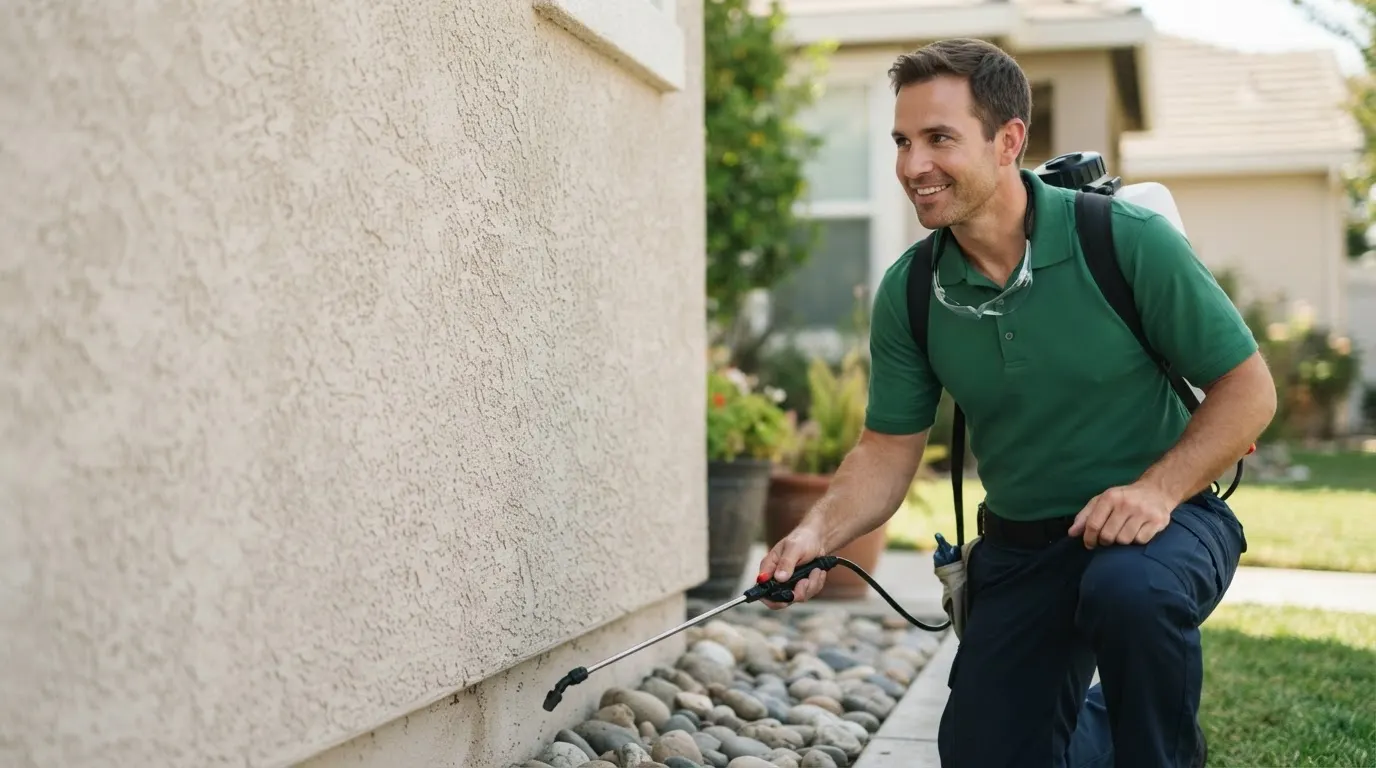
Pest control service in Fresno is an integrated inspection, chemical barrier application, and mechanical exclusion system designed to eliminate structural infestations and halt insect intrusions throughout Fresno County residences.
Every service reflects the same meticulous attention to detail, whether it's a single job or a larger pest control sevice project across Fresno.
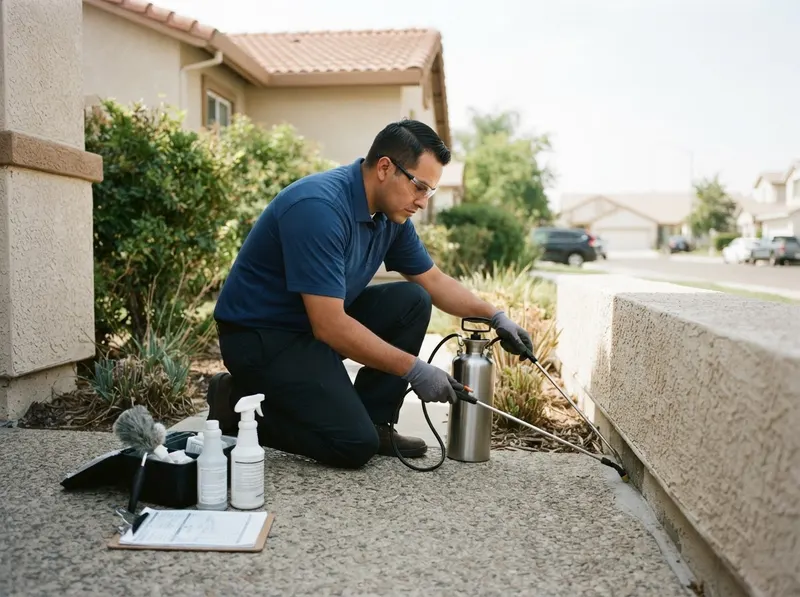
Quarterly and bi-monthly residential maintenance programs establish a continuous three-foot vertical and six-foot horizontal barrier around your foundation slab. Technicians de-web eaves up to sixteen feet, treat weep screeds, inject crack-and-crevice voids, and eliminate common invaders including crickets, earwigs, silverfish, and field roaches before interior migration occurs. Every service protocol incorporates a comprehensive property inspection that checks landscape edging, decorative ground cover, exterior plumbing bibbs, and patio slabs for active insect harborages. Formulations deployed in these visits rely on long-lasting microencapsulated suspensions engineered specifically to withstand ultraviolet degradation and soil alkaline balance across the Central Valley. Technicians systematically sweep eaves, exterior light housings, window frame perimeters, and door jambs to strip spider egg sacs, wasp starter nests, and climbing pest pathways before chemical application begins.
Get a quote →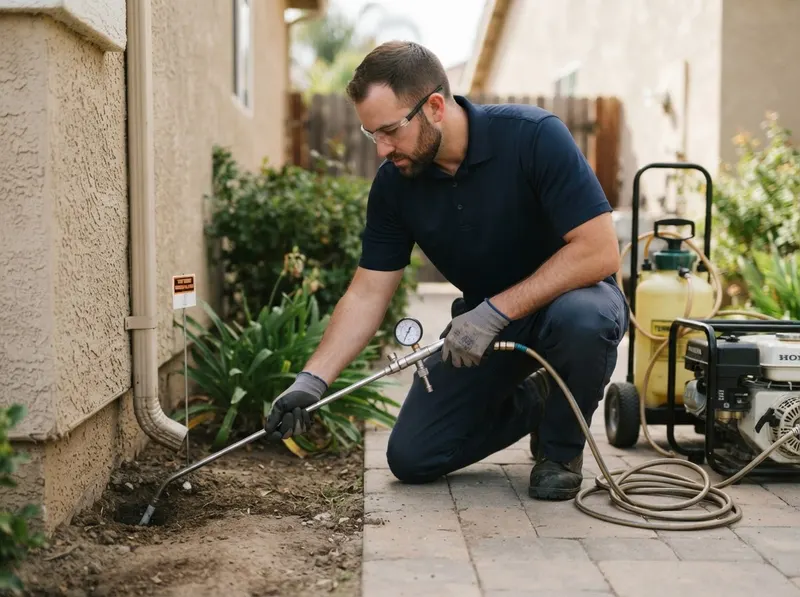
Liquid non-repellent termiticide applications create an uninterrupted chemical barrier within the perimeter trench surrounding exterior concrete footings. Technicians drill hollow block walls and concrete patios where necessary to establish subterranean protective zones that neutralize worker termites before structural framing timbers suffer load-bearing wood rot or structural failure. Our application teams excavate continuous trenches six inches wide by six inches deep directly adjacent to exterior foundation stem walls, saturating the backfill soil with non-repellent termiticide at label-specified volumes of four gallons per ten linear feet per foot of depth. Sub-slab injection rods deliver chemical barriers under connected concrete slabs, driveways, front porches, and garage floor interfaces where subterranean mud tubes typically ascend undetected. This systematic soil barrier halts Reticulitermes hesperus colonies operating in deep clay subsoils, terminating colony workers through horizontal transfer throughout the underground nesting network.
Get a quote →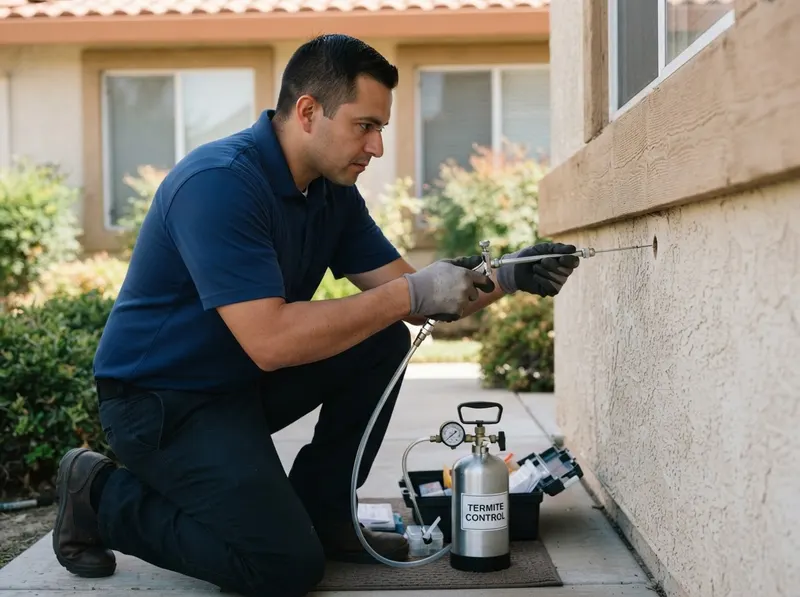
Precision structural timber treatments target isolated drywood termite colonies inside structural rafters, window headers, and door casings. Technicians identify kick-out holes and fecal frass deposits, drill small six-millimeter ports directly into gallery chambers, and inject specialized pressurized foam or liquid borate formulations to neutralize the entire localized wood-boring colony. Acoustic listening equipment and moisture meters assist technicians in pinpointing hidden gallery networks without requiring destructive demolition of interior drywall or architectural trim. Injected foam agents expand at an 8-to-1 ratio, penetrating deep into micro-fissures, cross-grain kickout tubes, and structural wood joints to coat gallery chambers thoroughly. Once the localized chamber is saturated, technicians patch drill access holes with hardwood dowels and paintable timber compound, leaving treated structural members protected against re-infestation for years.
Get a quote →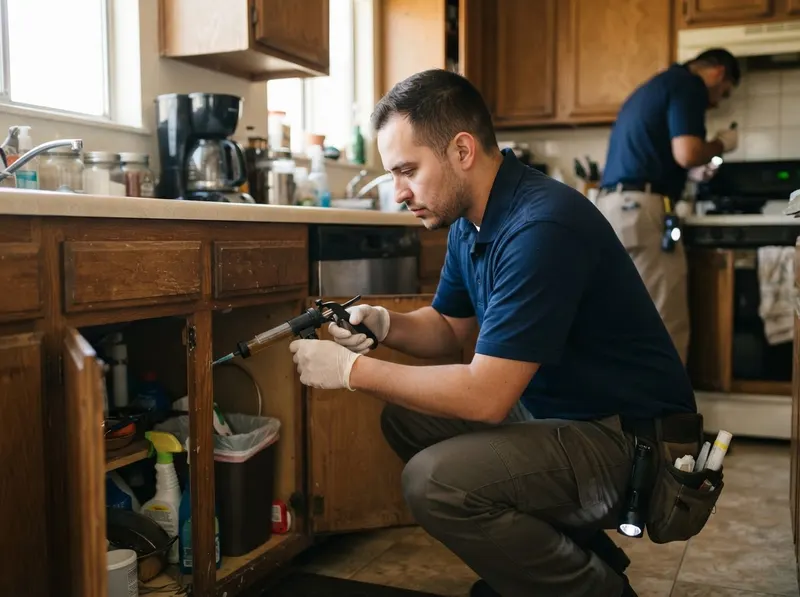
Two-stage intensive eradication protocols target indoor German cockroach populations harboring inside electrical wall outlets, kitchen cabinet hinges, and appliance compressor motors. Technicians place non-repellent insect growth regulators (IGRs) alongside targeted bait matrices and conduct precision void flushing to eliminate reproductive nymphs and stop active breeding cycles. Because Blattella germanica exhibits rapid reproductive cycles and broad resistance to standard pyrethroids, our protocol employs multi-class active compounds including hydramethylnon, dinotefuran, and pyriproxyfen. Technicians inspect behind dishwasher kick-plates, refrigerator coils, under-sink drain collars, and inside hollow drawer tracks to apply micro-bead gel formulations in pinhead-sized placements. Follow-up treatments scheduled ten to fourteen days after initial knockdown catch newly hatched nymphs emerging from egg cases, cutting off the colony before another generation matures.
Get a quote →Targeted mechanical de-webbing combined with wettable-powder residual insecticides creates an inhospitable zone for dangerous arachnids. Technicians treat exterior utility boxes, decorative rock borders, patio furniture recesses, window wells, and garage corners to neutralize both western black widows and aggressive cellar spiders harboring near human activity zones. Technicians employ extendable carbon-fiber cleaning poles equipped with dense web-clearing brushes to physically extract egg sacs containing hundreds of developing spiderlings from high eaves, roof gutter lines, and decorative stucco recesses. Ground-level applications focus on dark, dry voids including irrigation control valve enclosures, gas meter assemblies, crawl space access wells, and woodpiles stacked near foundation perimeters. Long-lasting wettable-powder formulations adhere to rough exterior masonry, stucco, and wood siding, maintaining strong contact toxicity even against tough, thick-cuticled arachnid species.
Get a quote →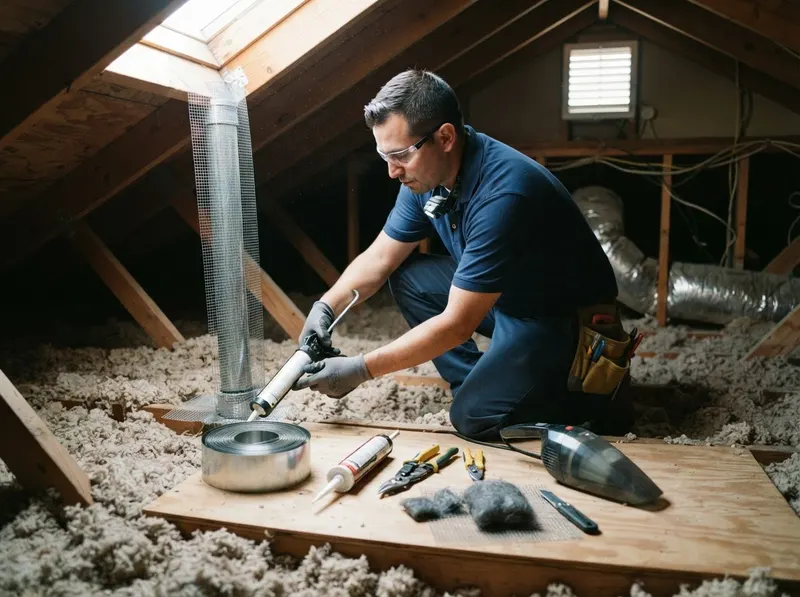
Complete structural rodent proofing seals entry points larger than a quarter-inch across roof transitions, dormers, and crawl space vents. Technicians install heavy-gauge galvanized steel mesh, seal utility line penetrations with expanding foam backer rods, sanitize contaminated insulation voids, and trap remaining interior rodents to secure living areas. Inspection specialists examine the full roof perimeter, ridge vents, tile overlaps, foundation weep vents, and fascia interfaces for sebum rub marks, gnawed edges, and fresh droppings. All structural exclusion points are secured using twenty-gauge, quarter-inch galvanized hardware cloth anchored with industrial corrosion-resistant fasteners. Interior attics receive strategically placed heavy-duty snap traps along verified runway rafters, monitored on a structured cycle until trapping indicators confirm total elimination of the interior population.
Get a quote →Comprehensive dual-action bed bug programs eliminate pesticide-resistant bed bugs across all life stages, including microscopic eggs. Treatments combine targeted structural crack treatments, residual dust application into wall baseboards, mattress encasement protocols, and deep furniture seam injections to ensure total eradication from infested sleeping quarters and upholstered frames. Our service begins with a meticulous room-by-room physical inspection using ultraviolet inspection lamps and forensic magnification to map harboring concentrations in mattress seams, bed frames, headboard mountings, electrical cover plates, and perimeter baseboards. Technicians deploy specialized desiccating insecticidal dusts containing amorphous silica inside hollow wall cavities, providing lasting protection that physically erodes the protective outer wax layer of traveling bed bugs. Precision crack-and-crevice treatments along floor transitions and structural moldings ensure zero surviving bed bugs across all developmental instars.
Get a quote →Direct localized knockdown and nest removal eliminate aggressive paper wasps, mud daubers, and yellowjacket colonies from high roof eaves, patio ceilings, and exterior stucco overhangs. Technicians treat the attachment substrate with lingering residual repellents to deter scout queens from reconstructing paper comb structures in previously infested exterior architectural zones. Specialists utilize high-reach pressurized delivery equipment capable of targeting active comb nests up to twenty-five feet above ground level without requiring ladder placement against delicate architectural surfaces. After neutralizing active adult foragers and defensive sentinels with immediate knockdown formulations, technicians physically remove nest structures and scrape away residual pedicle glue. The immediate architectural footprint is then sealed with a microencapsulated repellent coating that interferes with secondary pheromone markers, stopping returning aerial foragers from rebuilding on that exact site.
Get a quote →You get a firm, itemized quote for your pest control sevice before any work begins, no surprises, no pressure.
Careful prep, tidy work, and a full cleanup when we are done. We treat your home and belongings like our own.
The same trusted, background-checked team from the first call to the final check.
If a residence shows persistent trailing Argentine ants along kitchen countertops or carpet tack strips, select a targeted microencapsulated non-repellent barrier paired with gel baiting rather than general broad-spectrum broadcast sprays. If an attic crawl space exhibits gnawed electrical insulation or cylindrical black droppings, select complete mechanical rodent exclusion using copper mesh and quarter-inch galvanized hardware cloth over temporary snap-trap setups alone. If drywood or subterranean termite fecal pellets accumulate on windowsills or mud shelter tubes ascend perimeter concrete stem walls, select localized termiticide soil trenches or borate wood injections instead of standard surface perimeter insect sprays.
If outdoor entertainment spaces show extensive web development and ground-nesting spiders, select a comprehensive mechanical de-webbing service combined with wettable-powder micro-barrier residual treatments around foundation perimeters and window casements. If stored products or kitchen pantries exhibit webbed silk cocoons and active adult flight, choose comprehensive pheromone monitoring paired with thorough harborage sanitization rather than surface residual chemical applications. If German cockroaches appear in multi-family plumbing chases or behind kitchen refrigeration units, deploy dual-phase insect growth regulators alongside targeted non-repellent matrix baits instead of over-the-counter aerosol foggers that scatter nesting harborages.
If stinging insects build paper comb nests beneath high architectural eaves, select dedicated elevated knockdown sprays featuring localized residual barrier protection over standard ground-level insecticide applications. The trade-off between localized spot treatments and full exterior perimeter management is upfront expenditure versus long-term colony suppression; localized treatments resolve visible clusters immediately, whereas full 90-day maintenance cycles prevent recurring subterranean migrations from soil fissures during severe Central Valley dry spells.
Every project gets a firm, written price after a free on-site visit. Ranges below for orientation.
Tell us about your pest control sevice job and we'll send a clear, written quote, usually the same day. Or just call and talk to a real Fresno pro.
(559) 315-6558
Fresno's unique geography within the San Joaquin Valley creates intense microclimates that govern pest movement across Fresno County. Prolonged summer stretches exceeding 100 degrees dry out surface soil, pushing subterranean moisture-seeking pests like Argentine ants and Oriental cockroaches directly into residential foundations near Woodward Regional Park and Fig Garden. During winter months, heavy tule fog lowers ground temperatures and saturates crawl spaces, causing roof rats from surrounding agricultural parcels to seek warm attic insulation along mature corridors near Sunnyside and the Tower District. Major traffic arteries including Highway 41, Highway 99, and the Highway 180 corridor channel pest vectors across commercial sectors directly into established residential developments in Hoover, Bullard, and Roosevelt. Furthermore, historic properties located near the Huntington Boulevard Historic District and Roeding Park often feature raised foundations and unsealed crawl space air vents that provide uninterrupted entry for cold-weather pests during prolonged stagnant fog inversions. Suburban expansions surrounding Fresno State University and Save Mart Center intersect with former citrus groves and vineyard parcels, exposing structural perimeters to migrating field crickets, black widows, and subterranean termite alates emerging from deep hardpan soil fissures after rare winter rains.
Free estimates for Fresno & the surrounding area.
 Truvexa Insect Control